The Population Genomic Screening Network is an NIH-funded program focused on integrating population-based genomic screening into primary care. It aims to broaden access to and the use of genomic medicine and support earlier detection of common, actionable conditions. The Network has the following main goals:
Evaluate primary care-based screening for select genomic conditions with the strongest evidence for screening to prevent disease or reduce its severity
Use established strategies for meaningful community engagement in all phases of design, conduct, and evaluation
Develop effective strategies for connecting patients found to have genomic risk variants to follow-up care
Population Genomic Screening
Population-based genomic screening is the practice of offering genetic testing for selected inherited conditions to a defined population. Historically, genomic screening has been targeted to those with a known family history of the given condition. In contrast, this Network is piloting offering screening population-wide to assess if it helps identify individuals who would otherwise remain undetected and allow them to benefit from earlier detection, prevention, or treatment.
Participating Centers
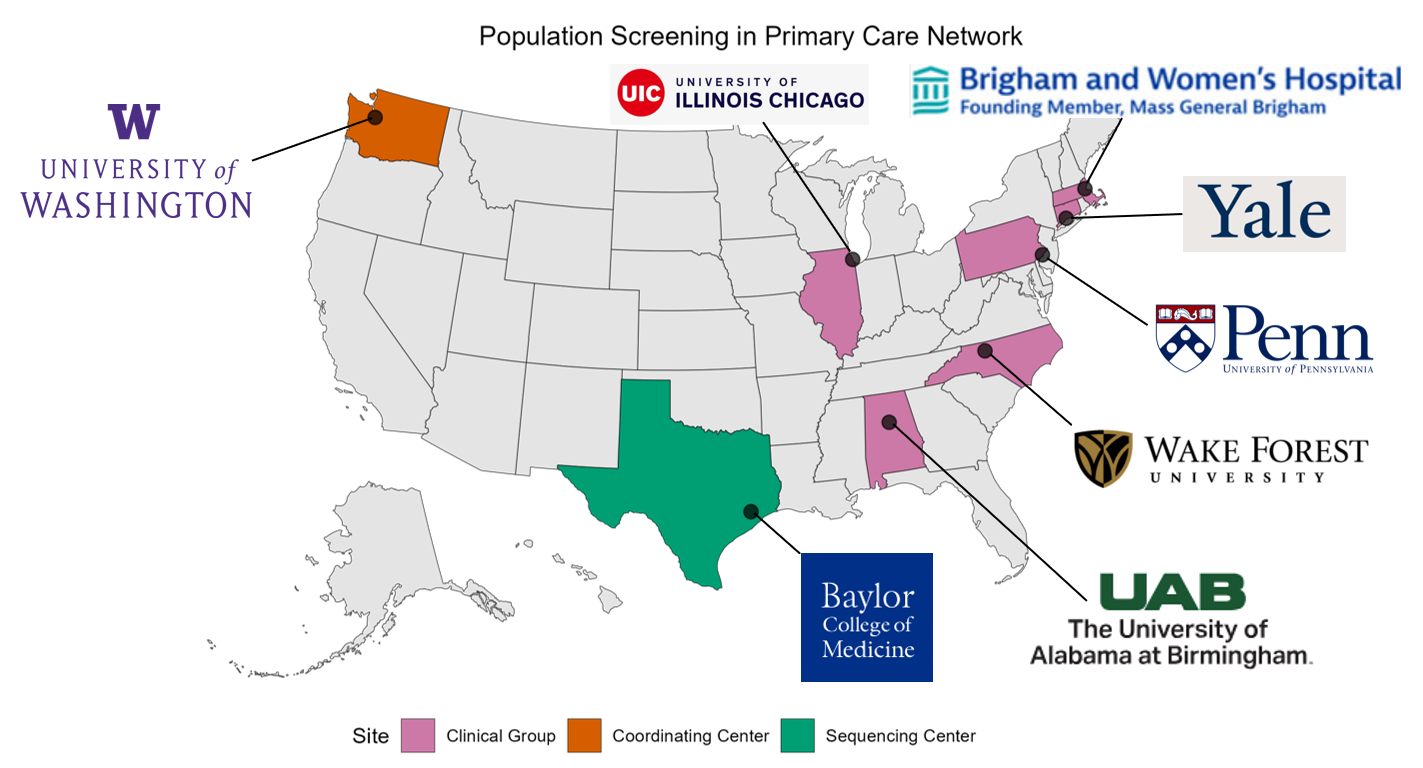
The PGS Network is made up of six Clinical Groups, a Sequencing Center, and a Coordinating Center, and NIH program staff.
Credit: Devon Truax, NHGRI
Clinical Groups
The Clinical Groups span the United States and collaborate with multiple individual primary care sites. The diversity of Clinical Groups and primary care partners allows implementation and evaluation of the Network-wide screening protocol across different community settings and adapted to different community needs.
Learn more about the six Clinical Groups.
Sequencing Center
All genome sequencing and genetic analysis is performed at the Human Genome Sequencing Center at Baylor College of Medicine. The screening panel and process is developed with collaboration across the Network.
Learn more about the Sequencing Center.
Coordinating Center
The Genetic Analysis Center at the University of Washington serves as the Network Coordinating Center. They oversee aspects of the network's activities, such as management of program outreach, management of data release, and coordinating logistics for the network.
Learn more about the Coordinating Center.
Network Timeline
The Network launched in summer of 2026 and has a five year timeline to complete development, implementation, and evaluation of a population genomic screening protocol. Participant recruitment is expected to launch at the beginning of year two, in summer 2027.
| Year 1 - Develop Network Protocol | Year 2 - Recruit and screen participants | Year 3 - Outcomes and follow-up | Year 4 - Outcomes and follow-up | Year 5 - Final Analysis and Dissemination |
|---|---|---|---|---|
|
|
|
|
|
Informed by Communities
The importance of community involvement to the success of health programs is well documented. In line with this evidence, the Population Genomic Screening Network will utilize both local and centralized community-engagement structures to engage communities throughout the design and implementation of the pilot screening program. Engagement will guide the Network's efforts to reflect communities’ needs and priorities, address barriers to genetic screening, and support feasible, equitable, evidence-based care.